

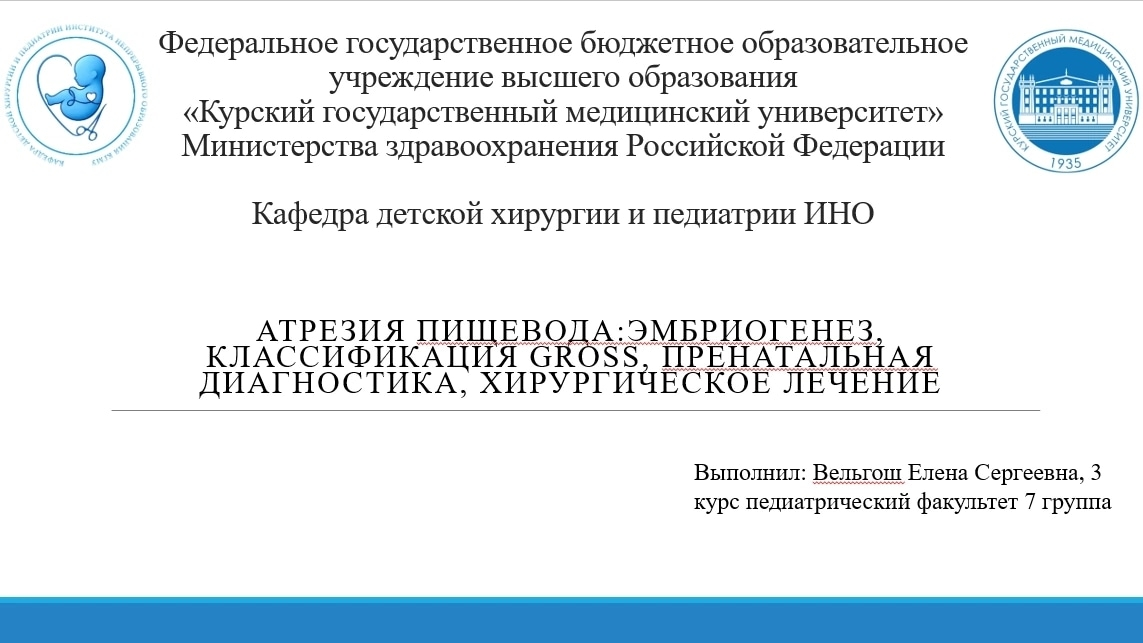
В рамках встречи был представлен доклад:
С докладом выступила Вельгош Елена Сергеевна. В своём выступлении она разобрала атрезию пищевода: эмбриогенез, классификацию Gross, пренатальную диагностику и хирургическое лечение.
Основные обсуждаемые вопросы:
Историческая справка: первые описания атрезии пищевода, вклад Томаса Гибсона (1697) и других исследователей, эволюция взглядов на природу заболевания и становление хирургических методов его коррекции.
Эмбриогенез атрезии пищевода и трахеопищеводных свищей: нарушения разделения первичной кишки на пищевод и трахею.
Классификация Gross: типы атрезии пищевода и их клиническое значение.
Пренатальная диагностика: ультразвуковые маркеры (многоводие, отсутствие визуализации желудка), роль МРТ и консультирование семьи.
Хирургическое лечение: предоперационная подготовка, выбор доступа и метода операции, этапность и сроки вмешательства, ведение послеоперационного периода.
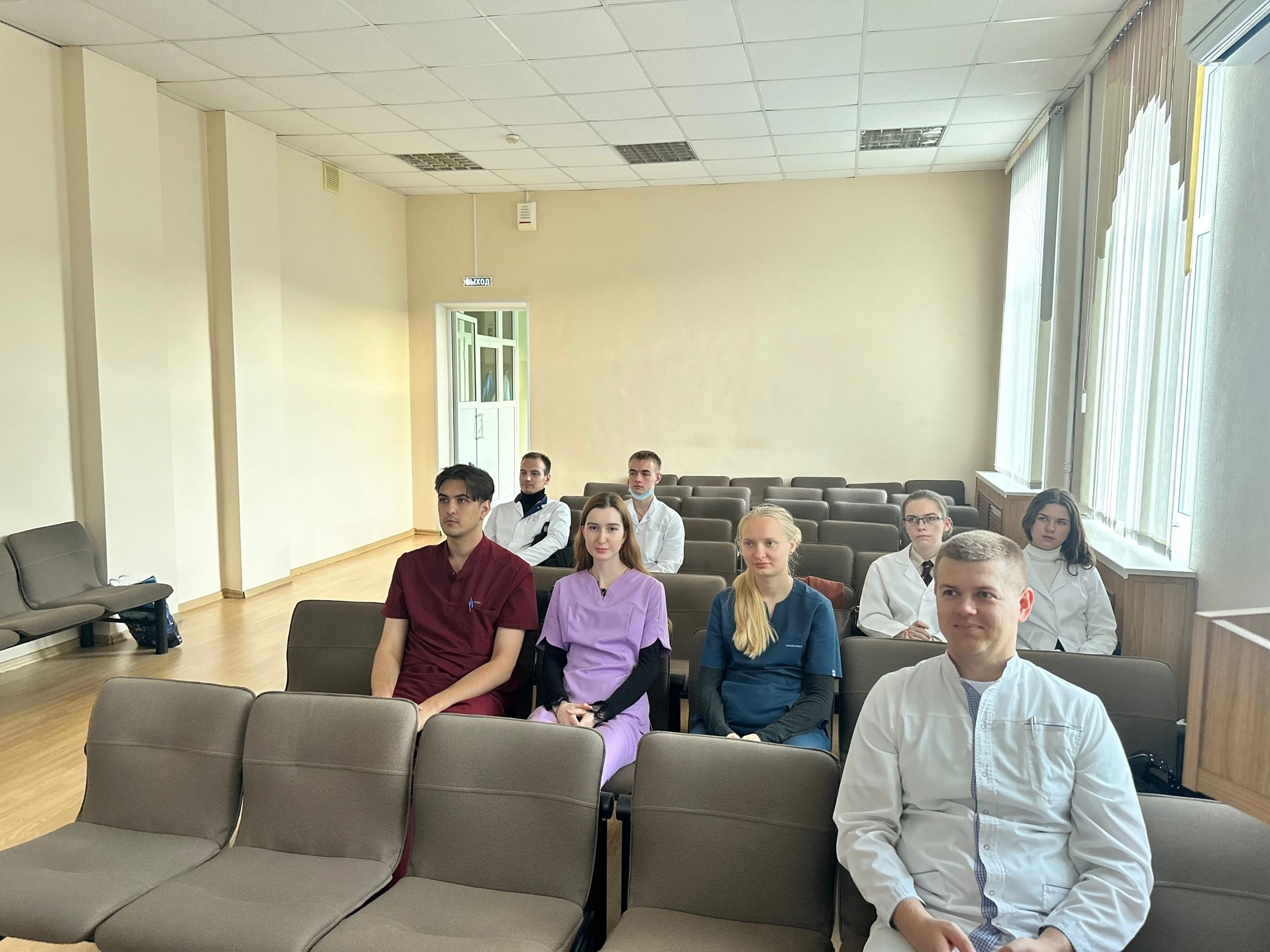
Заседание прошло в формате оживлённой дискуссии. Участники активно задавали вопросы, разбирали сложные клинические случаи и обменивались мнениями по диагностике и хирургическому лечению атрезии пищевода у новорожденных.
Благодарим кружковца за содержательный доклад и всех присутствующих — за проявленный интерес и активное участие в работе кружка!
---
MEETING OF THE STUDENT RESEARCH SOCIETY "ESOPHAGEAL ATRESIA: EMBRYOGENESIS, GROSS CLASSIFICATION, PRENATAL DIAGNOSIS, SURGICAL TREATMENT"
On September 30, 2026, at a meeting of the Student Research Society of the Department of Pediatric Surgery and Pediatrics of the Institute of Continuing Education of KSMU, a pressing issue in pediatric surgery was discussed — esophageal atresia in newborns. The Society's meetings are held at the premises of the Regional State Budgetary Healthcare Institution "KODKB" (Kursk Regional Children's Clinical Hospital).
During the meeting, a presentation was delivered:
The presentation was given by Elena Sergeevna Velgosh. In her talk, she examined esophageal atresia: embryogenesis, Gross classification, prenatal diagnosis, and surgical treatment.
Main topics discussed:
Historical background: the first descriptions of esophageal atresia, the contribution of Thomas Gibson (1697) and other researchers, and the evolution of views on the nature of the disease and the development of surgical methods for its correction.
Embryogenesis of esophageal atresia and tracheoesophageal fistulas: impaired separation of the primitive foregut into the esophagus and trachea.
Gross classification: types of esophageal atresia and their clinical significance.
Prenatal diagnosis: ultrasound markers (polyhydramnios, absent gastric visualization), the role of MRI, and family counseling.
Surgical treatment: preoperative preparation, choice of approach and operative technique, staging and timing of intervention, and postoperative management.
The meeting was held in the format of a lively discussion. Participants actively asked questions, analyzed complex clinical cases, and exchanged opinions on the diagnosis and surgical treatment of esophageal atresia in newborns.
We thank the Society member for the informative presentation and all those present for their interest and active participation in the work of the Society!
- Все новости23434
- Поступающим444
- Образование3460
- Наука3411
- Общество3217
- Университетская жизнь5685
- Медицина1286
- Трудоустройство548
- Непрерывное образование81
- Международная деятельность393
Информационные рубрики
Главный корпус
+7(4712)588-137
305041 К.Маркса,3, г.Курск
kurskmed@mail.ru
Приемная комиссия
58-81-38
305041 К.Маркса,3, г.Курск